Friday, January 10, 2020

Fresh Start


One day I would like to write my paternal grandfather’s story out in full. Today I will hit the highlights and show how he made a fresh start when he was almost 60 years old.

Harry Nels Peterson was born in Kewanee Illinois in 1905. He grew up on a farm outside of Princeton, Illinois. A move to a farm in Putnam Illinois cut short his education and he never graduated from high school. By the time he and his family moved back to Princeton around 1926, he was working full time on his dad’s farm.

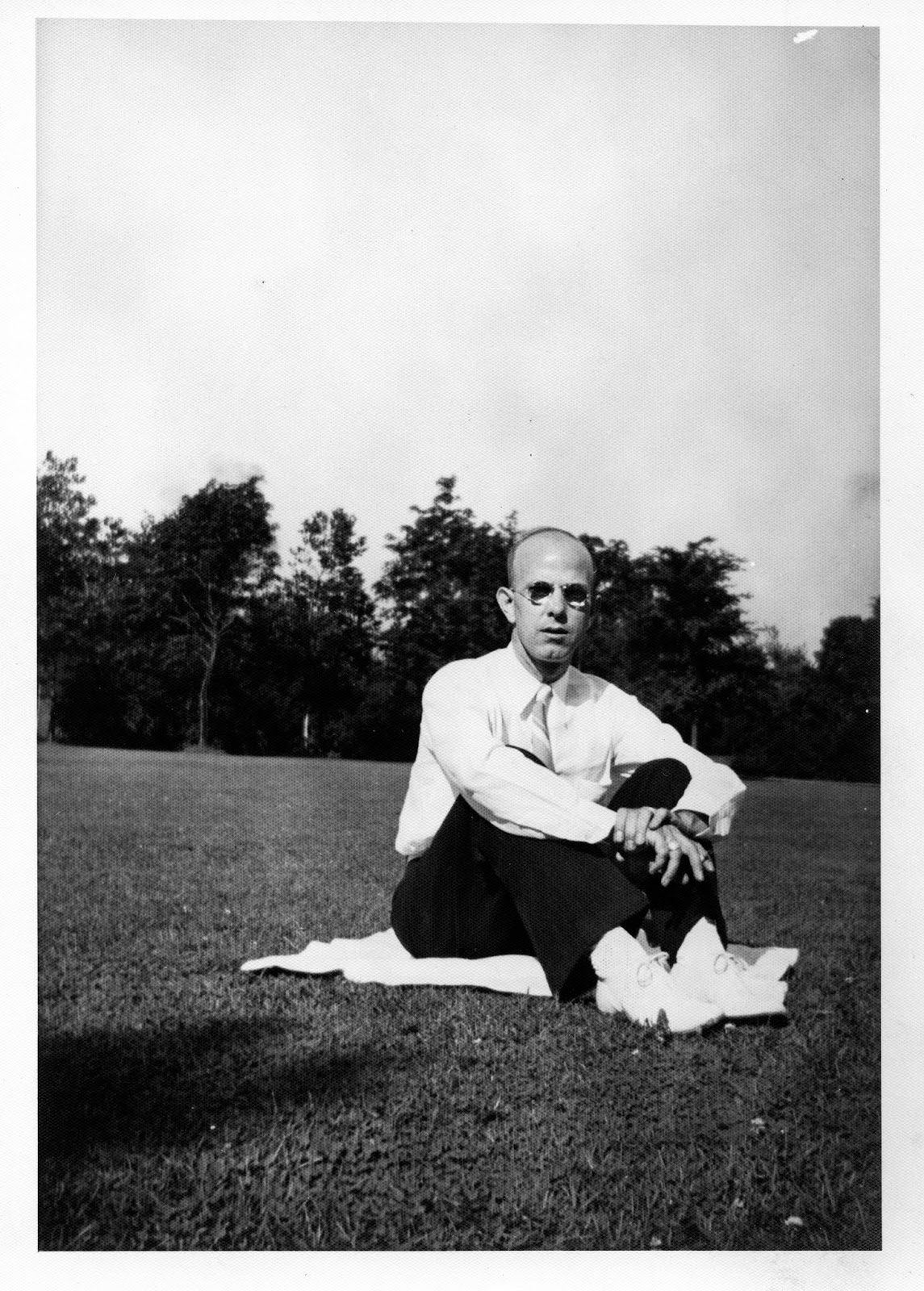
I believe that something inside Harry wanted more than farm life. Once back in Princeton he procured a job at a Larkin grocery store in town. He also owned a car. From this photo you can see that he was quite a dapper man.


Harry must have been successful at Larkin because he became manager of one, then both, of the stores in town. 


He married Edna Johnson in 1932 and their only son Stan was born in 1936. Harry was a loving, involved father, dedicated husband, and hardworking businessman. In 1937 Kroger bought out Larkin and Harry began working his way up the ladder at Kroger. He became regional then district produce manager for Kroger’s, and was a deacon at First Lutheran Church in Princeton. 

Around 1961, about the time that his son got married, Harry received what must have been devastating news from Kroger. A new policy had been put in place and anyone with an upper management position was required to have a master’s degree. All of a sudden, Harry was unqualified to do his job.

Kroger gave him two options. He could take a job as a manager at the new flagship store in Peoria, or he could take early retirement. Managing one store after years of being a regional supervisor was a demotion Harry couldn’t stomach. He took early retirement.

Princeton Bureau County Republican,
17 August, 1972, p. 9
A fellow church member, Malcolm Lewis, was an insurance salesman and worked for Country Companies. Lewis helped Harry get a job at Country Companies and Harry started at the bottom of the insurance business. But he didn’t stay there for long.

Harry’s natural people skills served him well as he learned the ins and outs of selling insurance. He must have known so many people in town through church and the grocery business. Soon he was winning awards, trips, and accolades galore. He never retired; when he died on August 8, 1978, he was still employed by Country Companies.

Princeton Bureau County Record, 25 April 1978, p. 15
I only knew my grandfather as an insurance salesman, and a successful one at that. I remember his car that he used for business calls, the back seat and the front passenger side were full of papers, files, and notes. I remember hearing about several trips that my grandparents took: to Morocco where he rode a camel; to Spain where he attended a bull fight; and cruises to Alaska and the Caribbean. Not bad for a farmer boy with a 10th grade education. Although Harry’s fresh start was forced upon him, he weathered it well and came out on top.

Friday, January 25, 2019

Burton Gustaf Falk


Dear Grandpa Falk,

You are my mom’s father, but I never got a chance to know you the way I knew my Grandpa Pete. You died a month before my third birthday; my brother was one and a half. I have a vague fuzzy memory of seeing you in a hospital bed but I don’t remember anything about what you were like. I wish I could sit down with you and talk for a while to get to know you better.

Here is what I know about you.

I know the basic facts of your life.

You were born on 1 February 1901 in Aurora, Kane County, Illinois.
Little Burton Falk, about 3 years old

You had two younger sisters, Norma and Adrienne.
The Falk family
Back: father Erik Falk, Adrienne, Norma, Burt
Front: mother Helen

You graduated from West Aurora High School and spent a year at the University of Nebraska but never graduated.
Young Burt

You married my grandmother Verna Graf on 30 June 1936 in Aurora, Kane County, Illinois.
Burt and Verna on their wedding day

You lived in Berwin Illinois after you were married and later moved to Aurora.
You died on 2 October 1965.

I know a few “tidbits” about you.

You had terrible eyesight, in fact you had cataracts. I remember Grandma Falk showing me your early version of contact lenses that you wore, hoping that they would help your vision.
Burt out west


You were bald. My grandma had a copy of American Gothic on her living room wall and for a long time I thought the farmer in that picture was you.

When I was newly married my mom said that my husband reminded me of you. I know that you had a passion for photography and often took my mom with you when you went out taking pictures. You were meticulous about noting details of your photographs on your slides. My husband is pretty meticulous about recording and cataloging his favorite radio programs. Is this the similarity that Mom saw?  

You worked for International Harvester when you lived in Aurora but had to carpool east every day. So every morning you drove east into the rising sun and in the evening you drove west into the setting sun. What a drag, and yet you did it for years.

You smoked cigarettes. In one of my mom’s old family movies there is a scene where she strikes a match to light your cigarette. But you told your daughter never to start smoking, and she never did. You died of lung cancer. My mom told me that when you were in the hospital with the cancer that killed you, you cried, regretting that you would never see me or my brother grow up.
Burt at the Municipal Pier in Chicago


Here are some things I can guess about you.


Burt and Verna
You were sensitive. You met Verna, your future wife, and then traveled west for some kind of a job you had with the telephone/telegraph company. I have a letter that you wrote to your mom and you told her how much you cared for Verna.

You were a peacemaker. You and Grandma didn’t play cards. My mom said it wasn't because you believed it was wrong to play cards, but because you and Grandma once had a nasty fight over a card game and you didn’t ever want to fight like that again.

You were a hard worker and you loved your little family. You brought your daughter Sarah to the circus, parades, and ball games. She was the light of your life
Burt and baby Sarah, my mom


You were patient. Your wife’s mother lived with you for several years when she had dementia—“senility” they called it back then—and hers was an angry dementia. There must have been some pretty rough times.

I’m sorry I never knew you, Grandpa. My dad says you were introverted but friendly, words I would also use to describe myself! I've got so many questions I'd like to ask you, if we could sit down together. Why did you quit college? What was that trip out west all about? How did you meet Verna? Did you wish you had a different job? What was your hardest day? What was your best? What made you laugh? Yes, there's a lot I don't know about you, Grandpa Falk, but I know enough to say I'm glad you are my grandpa.
Burton Gustaf Falk


Thursday, December 27, 2018

2019 Genealogy Resolutions!

The Peterson Family, ca 1970
Front row: Stacy, Carla, Sonia
Back row: Chris, Stan, Sarah


I'm a great one for making resolutions, and, like many of us, not so great at keeping them. But hope springs eternal, so here goes for 2019.

Two modest genealogy goals for 2019:

1. I will double the number of blog posts from last year.
This shouldn't be too hard; I only posted three times last year! How hard can it be to write six posts in a year, if I put my mind to it? I'd like to use Amy Johnson Crow's blog prompts, 52 Ancestors in 52 Weeks, for inspiration every now and again, but don't expect 52 blogs posts from me. Not this year, anyway!

2. Finish writing an ancestor story.
Can't say too much more about this as I'm writing it as a gift. Let's just say I've got a ways to go, and this goal might help me get there.

Here's to lots more genealogy writing and researching in 2019!

Saturday, December 22, 2018

A Graf Family Christmas

Back Row: Leonard Graf, young Leonard Graf, John Graf, Verna Graf Falk, Burton Falk, Raymond Smith
Front Row: Martha Bonin Graf, Peter Smith, Martha Graf Smith, Sarah Falk, Martha Ann Smith, John Graf


Merry Christmas from the Graf family. Three generations of the family are gathered here in about 1939 to celebrate Christmas. I love how Grandma Graf is holding her little grandson Pete on her lap warmly, and how his cousin, little Sarah, is keeping a close eye on him. I don't know a lot about most of the people in this photo, but I'll tell you what I know.

The matriarch and patriarch of the family, Martha and John Graf, were the immigrant ancestors. They came from different areas of Germany. Martha came from Schleswig-Holstein in the north and John came from Wurttemberg, a southern province of Germany. My Grandma, their daughter Verna, used to say that John would always tease his wife because of her northern accent.

John and Martha married in Turner (West Chicago) Illinois in 1895. John was a harness maker and Martha a home maker. They had five children: Leonard, Marguerite, Irma, Verna, and Martha. Irma died in early childhood. Marguerite moved to Vermont and married Franklin W. Doe. The rest of the family is pictured here.


Martha passed away in the Elgin (Illinois) State Mental Hospital in 1958. She probably had Alzheimer’s or some sort of undiagnosed dementia. John died in 1950, recognized as a master gardener.


Their oldest son Leonard died in 1986. His wife was named Edith but is not pictured here; I wonder if she was behind the camera? Leonard's oldest son, also named Leonard and consistently called "Young Leonard" by my grandma, was, I think, an engineer or chemist who contributed to the war effort in World War II.  Leonard and Edith's second son Johnny flew a reconnaissance plane in World War II in the Pacific Campaign. He was shot down over the Pacific Ocean in 1945 and his body never recovered.


Verna, my grandmother, married Burton Falk and lived in Berwyn and Aurora, Illinois with their only daughter, my mom, Sarah. Burton died in 1965 of emphysema and Verna died in 1988.


Martha, dear sister to Verna, married Ray Smith and had two children, Martha Ann and Pete. Martha died from cancer in 1943. I know very little about her husband Ray or Martha Ann and Pete. They may or may not still be alive.

Genealogy is the compilation of names and dates in a family tree. Family history is the context and stories of those people. I haven’t done much research on my mom’s side of the family and we never connected with them in a meaningful way so I really only know the basic facts about them. Nevertheless, they are family. The lived and died; loved, laughed and cried. They celebrated Christmas together, just like I do today with my family. The world is made up of families like this, living and loving together through the bad and good. Whatever our future holds, may we, like them, keep each other close in love, both during the Christmas season and the whole year though.

Monday, November 19, 2018

Who Was Marie?

August Anderson was Cecilia Anderson Peterson’s brother. He lived in Kewanee, Illinois, first with his mother Inga and later with his wife Marie/Mae (Dewitt), whom he married on December 26, 1912. According to the 1920 U.S. Census they lived on Ross Street in Kewanee with Inga. In the 1930 U.S. Census they are listed with an “adopted daughter” Marie, who was 14 years old at that time. In the 1940 U.S. Census young Marie is nowhere to be found.

1930 U.S. Census, Kewanee, Henry Co., Illinois


I have two pictures of Marie with August and Mae. In one, Marie looks to be about 6. In the second one, Marie is a little older, perhaps close to the age of 14. (August, Mae, and Marie are named on the back, probably written by Cecilia)
August, Mae, and little Marie Anderson, date unknown

August, Mae, and young Marie Anderson, date unknown

Marie is also in a group photo with the rest of the Peterson clan.

Back Row: Mr. Eckwall, Uncle Andrew Pierson (Grandpa's brother), Harry, Uncle Gust, Grandpa P., Grandma Anderson
2nd Row: Letha Larson, Nina, Hildur, Helen, Mrs. Larson, Grandma
Front row: Lil, Gilbert, Marie Anderson, Alice Elmer


Does anyone know anything about the young Marie? Where did she come from? Was she really adopted, was she a foster child, or was she their biological daughter and the census is wrong? My curiosity is piqued and I’d like to know more about her. I’ll keep researching, but please comment if you have any knowledge of young (or old!) Marie.

Friday, April 27, 2018

Inga Larsdotter Anderson Her Story from Sweden to America

Ingar Larsdotter Anderson
family archives


Inga Anderson, born Ingar Larsdotter, was born and lived the first part of her life in Skåne, Sweden, a province in the southern part of the country. Skåne was part of Denmark until 1658 and the area retains ties to Denmark to this day. Skåne is a fertile area, known as the breadbasket of Sweden, and it is full of farms and castles. But Ingar’s life was far away from castles. Her father was a peasant farmer who did not own his own land but farmed it for someone else. It was a hard life, living close to the land.

Church in Bollerup
Inga Anderson was born Ingar Larsdotter on December 18, 1848 in the parish of Bollerup, Skåne province, Sweden. Bollerup is about 9 kilometers southwest of Tomelilla. She was baptized with the name Ingar in the church at Bollerup.

Ingar’s parents were Lars Perssons and Elna Ericsdotter. Ingar was the fourth of seven daughters who were all born to Lars and Elna over a 15-year period. (Hanna b. 19 January 1841; Elna b. 25 November 1843; Eljena b. 2 July 1846; Ingar b. 18 December 1848; Cecilia b. 21 November 1851 d. 26 February 1852; Cecilia b. 2 January 1853; Agda b. 4 April 1856) Ingar’s father Lars died in 1864, when Ingar was 16.

In 1866, when Ingar was 18, she went out on her own. She worked on farms in Bollerup, then in the neighboring parishes of Ullstorp and Smedstorp. While in Smedstorp, Ingar met a young man (younger than she!) named Nils Andersson and they married in the Smedstorp church on December 31, 1874.
Church in Smedstorp

Ingar was 26 years old when she married. Nils was a cotter, a farm laborer; he worked on a farm but owned no land of his own, a common situation during the 1800s. Their first daughter Johanna was born May 28, 1875 and their son August was born December 2, 1878.

Nils and Ingar lived somewhat of an itinerant life, moving every few years and usually leaving in the fall after the harvest. Whether this was because of the availability of work or due to some other reason is not known. At this time in Sweden inherited land was divided evenly between all the sons, causing the size of farms to become smaller and smaller. For the peasant farmer, then, this meant less and less land to work on.

Church in Vanstad

In 1880 Nils and Ingar moved with Johanna and August to Vanstad, in Malmohus province. Their youngest daughter Cecilia was born on 10 June 1881. Vanstad is known for its windmills and wheat fields, so Nils may have worked on a wheat farm to support his young family. 


In 1883 the family moved to Glumsöv. They only stayed two years before they moved to Kvistofta in 1885, and then moved again in 1889 to Hässlunda. They were working their way (perhaps literally, for Nils) northwest to the coast. One more move in 1890 brought them to Gustafslund, a place outside of the city of Helsingborg (population 4000 in 1850, Wikipedia). Nils’ occupation is listed as “Statdrång,” a state servant. During this time Joanna, now about 15 years old, struck out on her own and lived and worked on a farm in Välluv. She returned to the family in 1891.


Swedish household examination record from Helsingsborg, 1892

The 1892 Helsingborg household examination record for the Anderson family has an important notation: Amerika, 12 May 1892. (See images below) The time had come for Nils and his family to leave Sweden for America. When the family left Sweden they were Nils Anderson, his wife Ingar Larsdotter, Johanna Anderson, and August and Cecilia. Johanna had a last name but August and Cecilia did not because in Sweden children did not usually take a last name until they lived on their own. Johanna had lived on her own for several years but for unknown reasons decided to emigrate with her family rather than remain in Sweden.


Port of Malmö before 1900

Records indicate that the family went down the coast to Malmö where they registered with the police (which was part of the emigration process). Then they boarded a ship that would take them to England

There was no direct route from Sweden to America, so emigrants from Sweden would sail to the city of Hull on the east coast of England. In Hull there were places for the emigrants to stay until they boarded a take a train that took them west across the country. Then they would sail from Liverpool or Southampton. The Andersons most probably took this route and left from Liverpool. Inga was 45 and her husband was 41 when they left Sweden for America; their children were 17, 14, and 11.


S. S. Germanic


Nils and Inga and their family sailed from Liverpool aboard the S. S. Germanic, which was owned by the White Star Line, the same shipping company that would build and sail the S. S. Titanic in 1912. The Germanic stopped in Queenstown, Ireland and then headed west across the Atlantic. On May 28 the ship landed in New York City, America.


Ellis Island, 1892

Before being able to set foot in New York, however, the family had to pass through immigrant processing at Ellis Island. Ellis Island was relatively new when the Anderson family arrived; it had just opened on January of 1892. Each immigrant was examined to determine whether or not they were physically and mentally fit to enter the United States.

They left New York and traveled to Kewanee, Illinois. Soon they were known as Nels, Inga, Anna, August and Cecilia Anderson.

Immigration always brings up questions about our ancestors. Why did the Anderson family go directly to Kewanee and settle there? Most immigrants either traveled with family or friends, or they had family or friends in the place they settled. This may have been true for the Andersons but as of yet no definitive answer to this question has been found.

In addition, a settlement called Bishop Hill was located near Kewanee. Since about 1850 many Swedes had immigrated to Bishop Hill in search of religious freedom, so the area was well known to Swedish immigrants in later years.

And why did this family leave Sweden? Over 1 million people left Sweden for America between 1821 and 1930. Land was becoming scarcer for farmers and their laborers. Some left to avoid military service. Most immigrants left their home country in search of a better life in America. Nels and Inga were old enough that they probably emigrated for the welfare of their children rather than for themselves.

Kewanee, in Henry County, Illinois, was founded in 1854. The name “Kewanee” is believed to be the word used by the Winnebago for “prairie chicken,” which were plentiful in 1854. In 1890 the population of Kewanee was 4569. The largest company in Kewanee in 1890 was the Haxtun Steam Heating Company. In 1892 it split into two companies, the Kewanee Boiler Company and the Western Tube Company.

Nels found employment, perhaps through the friends or family that were already in Kewanee. He worked in an iron machine shop as a tool grinder. Life in America was hard for Inga. Her oldest daughter died about 1895. In 1900 her husband died in a tragic accident on the train tracks near the depot as he walked home from work at the Western Tube Company.

Western Tube Company, Kewanee

In 1901 her youngest daughter Cecilia married another Swedish immigrant, Herman Peterson. Family lore says that Herman knew Cecilia’s brother August and that’s how Cecilia and Herman met. They were married on the 12th of October, 1901, at 7 p.m. at Inga’s house on Fourth Street in Kewanee by Rev. J. M. Rydman, the pastor of the Swedish Lutheran Church. Cecilia’s attendants were Bessie Peterson and Alma Nordquist and groomsmen were Andrew Peterson and August Anderson, Cecilia’s brother.

Cecilia and Herman’s wedding might have been somewhat of a bittersweet occasion for Inga, as she saw her daughter married and off to start a home of her own, leaving Inga behind. If Inga felt this way, however, she probably didn’t for long. Cecilia and Herman’s first child Hildur was born in June of 1902 and 8 children followed. 

Inga attended the Swedish Lutheran church in Kewanee and was active in several groups there. Hopefully she found community and support, not only from her fellow Swedes but also from her faith. Several pictures of Inga with her children and grandchildren suggest that the family bonds were strong and that they stayed close together.


Inga lived with her son August until her death in 1926. She was 78 years old. Her health had declined for two years, to the point of her being confined to her bed for four weeks prior to her death. Two weeks before she died Inga had a stroke. She is buried in Pleasant View Cemetery in Kewanee, Illinois.

So often the names on our family tree are just that, names and dates. Inga was like that for me until I started to research her life and the places she lived. I have come to understand that she lived a life of hard work and tragic events, but I would like to believe that she found joy in ordinary events such as seeing a rainbow after a storm, feeding her family well, worshipping her God, or hearing her grandbaby laugh. From Sweden to Kewanee, Illinois, sadness to blessings, this was the life of Inga Larsdotter Anderson.

Friday, April 21, 2017

Finding Baby Irma


 As far back as I can remember, this photograph of my Grandma Falk (Verna Graf Falk, my mother's mother) and her mother (Martha Bonin Graf) sat on a table in Grandma's living room in an oval frame. I was intrigued by the shape of the frame as well as the sweet photograph it contained, demonstrating the obvious tender feelings between my grandmother and her mother.

Recently a distant cousin on my mom's side sent me a copy of the photo, along with another photo (shown above) that I had never seen before, showing a baby girl in a fancy lacy dress. My cousin originally sent me a digital copy of both photos and we speculated about whether or not both little girls were my grandma. We thought that probably they were.

But when I received the photo, Martha's pin caught my eye and I looked a little closer at it. The pin contained a photo inside, and as I examined it with a magnifying glass I could hardly believe what I saw: the photograph on the pin was the same photo that my cousin had sent me. 

I believe that the little girl in the picture and on the pin is Irma, Martha and John Graf's second daughter and third child. Irma was born in West Chicago, Illinois on 1 May 1901. Sadly, little Irma died of pneumonia on 15 January, 1903 at 4 o'clock in the morning. Irma is buried in Oakwood Cemetery in West Chicago with a headstone that reads, "Our darling Irma." I can understand that a mother who had lost her 18-month-old daughter would wear a pin with the baby's photo on it. Perhaps it eased Martha's grief or was part of a mourning process for her.

My Grandma, Verna, was born less than a year after Irma's death, on Christmas Eve, 1903. I would expect that her parents would have been thrilled with another daughter after their sad loss. But I remember my mom telling me that Grandma always felt like she was a replacement for the little girl who died. I would hate to think that this is true. But what might a little girl think when she saw her mother wearing a pin containing the image of her sister who had died before she was born? 

I never gave much thought to the sister Grandma never knew, although after I visited Oakwood Cemetery and saw her grave I wondered about her short life. Now I have a face to put with "darling Irma." And while I will never know why Grandma felt diminished in her mother's eyes, I'll bet that if Irma had lived, she and Verna would have been great pals.