Showing posts with label #52Ancestors. Show all posts

Sunday, January 29, 2023

Education (#52Ancestors)

I used to think that, in my family, my mom and dad were the first generation to go to college.

But recently I discovered that this is not the case. Let me tell you Edna Johnson’s education story.

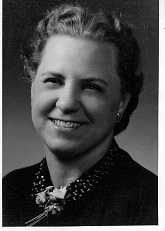
Edna was my dad’s mom. She was born and grew up in Princeton, Illinois, and in 1919 she graduated from Princeton High School. She didn’t seem to have immediate plans for her future. According to the 1920 U.S. Census, six months after graduation, she was still living at home with her parents and three sisters. She did not have a job. However, her oldest sister Myrtle was a teacher and her second oldest sister Laura was a stenographer at a dry goods store. They sound like good role models for being a working woman!


1920 U.S. Census for Princeton, Bureau County, Illinois

The social bits in the newspaper reported a few of Edna’s doings after graduation. She sang at a church funeral in December of 1919 and a couple more in early 1920. She also hosted a meeting of The Loyal Helpers, a church group. What the papers don’t say is whether Edna was looking for a job, or if she had any part time jobs. The year after Edna graduated from high school is a bit of a mystery.


26 November 1920 Princeton Bureau County Tribune, p. 12

In 1920 Edna was a college student!

Augustana College and Theological Seminary was in Rock Island, Illinois, 70 miles west of Princeton. In addition to the usual college departments Augustana also had a “Commercial Department,” which offered two options for study: the Bookkeeping course and the Stenography course. Each course took a year (36 weeks) and cost $100 each. If Edna took both of these courses, as the college catalog encouraged students to do, she would have received her certificate/graduated in 1922.


Here is Edna in the 1922 Augustana yearbook, the “Rockety-I,” one of 29 students in the Commercial Department that year.  

How did Edna end up at Augustana? Did she have a penchant for numbers or a head for business? Did she want to fill her time, or did she feel the need to contribute to the family financially? Did she want more than singing at funerals and hosting church groups?

And what exactly were her college days like? Did she participate in campus activities? Was she a good student? Did she make friends at Augustana? Where did she live?

These are questions that I may never answer.

What I do know is, in the fall of 1922, the Princeton newspaper starts reporting Edna’s activities in the church again. She sings at funerals and is involved with the Luther League. She travels and visits her younger sister Evelyn who is now a student nurse in Chicago. In 1923 sister Myrtle gets married; in 1924 Laura marries and the following year youngest sister Evelyn ties the knot. Edna’s father Theodore passes away in 1928. By the end of the decade Edna and her mother are alone in the house on West Putnam in Princeton. The 1920s must have been a hard decade for Edna.


1929 Princeton City Directory

I don't know when Edna first reaped the benefits of her commercial education at Augustana, but this city directory shows her employed as a bookkeeper for a bank in 1929. I sure wish I could have a conversation with her about what it was like to work in a bank when the stock market crashed in the fall of that year!

Edna worked at the bank until she married Harry Peterson, my grandfather (who, incidentally, never graduated from high school). Edna’s time at Augustana was a surprise to me, but it shouldn’t have been. My dad Stan, Edna’s son, attended Augustana and met his future wife, my mom Sarah. Although none of Stan and Sarah’s children went to Augustana, one grandson did.


Old Main, Augustana College
May, 2022

Here’s to Augustana College, for all the ways it has educated our family!


Friday, May 1, 2020

Land (#52Ancestors, Week 17)

I haven’t found anyone in my family who was a homesteader on federal land, or who was a land baron. But I want you to meet Charles Bruce Foley, mining engineer, who lived in more places in this country than just about anyone else on our family tree.

Charles Bruce and Esther Foley
with baby Esther, ca. 1915
Charles Bruce (also just called Bruce) was born in 1876 in Indiana. He married my great-grandmother's sister, so you can see that he is sort of a shirt-tail relative. But he intrigues me, mostly because he did move around so much. Here is an outline of the places I know he lived in:

1876 Indiana
1901 Colorado
1906 Mexico
1909 Arizona territory
1911 Milwaukee
1918 Dayton
1915 Michigan
1918 Brooklyn
1920 Bristol, CT
1923 Albany NY
1930 Ft. Wayne, Indiana
1936 Kansas City MO
1940 Reno NV until his death in 1965

That's a lot of ground to cover. Bruce attended Colorado College in 1901 in the class of "special student," which I think meant he wasn't there as a freshman, sophomore, junior or senior, but just to take classes. He later worked as a mining engineer.

Charles Bruce Foley,
student, circa 1901
I don't know what brought him to Aurora, Illinois, but that is where he met and fell in love with Esther Hedin. According to my mom's Aunt Adrienne, Bruce declared that he would not leave Illinois until Esther married him. I haven't found any documentary proof of this marriage (or even that he ever lived in Illinois) but I have the birth certificate of their first child, Ruth, who was born (in Mexico) in 1906, and it includes Bruce and Esther, father and mother.

Another interesting fact about Bruce Foley is that he owns a U.S. patent. According to his obituary, he was the inventor of the electric furnace for U.S. Steel Corp. According to his patent, Number 1,350,714, he invented the Process of Treating Metals and Alloys. (They could be the same thing, what do I know about electric furnaces or treating metals and alloys?)

Patent 1,250,714
Process of Treating Metals and Alloys

I don't consider my research on the Foleys complete in any way. I'd love to find out more about what Bruce did in all those places he lived, and if he lived places I haven't discovered yet. Bruce and Esther made their last move to Reno, Nevada in 1936; I'm not sure why. No doubt there were many mining related opportunities there for a mining engineer, perhaps he went for a job. Or maybe they moved there with retirement in mind. In any case Charles Bruce Foley, you picked a beautiful place to land.


Monday, April 6, 2020

Nearly Forgotten (#52Ancestors, Week 13)

Nearly Forgotten

Today I'm going to write about my great-grandfather's brother, Andrew Pierson. My great-grandfather was Herman Peterson. There has been discussion in our family about the different last names these brothers had and whether or not their names were changed at Ellis Island. That is addressed at the end of this post. What follows is based on research I have done in Ancestry.com, newspapers and by talking to relatives.

Andrew Pierson seems to be a person who hovered on the outskirts of our family. My dad and his cousins only remember a little bit about their great-uncle: He attended some of the family’s Swedish Christmas Eve celebrations, and toward the end of his life he lived in the “old folks’ home” in Princeton, Illinois. He was forgetful in his later years and maybe had a form of dementia or senility.

Here is what I have found about him in my research. Although his name changes, other things like his birthday and his relationship to his brother do not change.

Andrew Pierson came to the United States under his original Swedish birth name, Anders Hansson. He arrived in New York on March 17, 1900 on the S. S. Campania. He said that he was going to stay with his brother in Princeton, Illinois.


In the 1900 census he was living and working on a farm in Bureau Township, Bureau County, Illinois. He is listed as Andrew Peterson, born September 1877, immigration date 1900.


In 1917 Andrew Pierson became a United States citizen.

In 1918 he filled out a World War I draft card. His name was Andrew Pierson, he was living and working on a farm in Bureau County. He gave his birth date as September 22, 1877, and he listed Herman Peterson as his closest relative.


In 1923 he applied for a passport and traveled to Sweden, maybe visited his parents and family there. On the passport his gave his name as Andrew Pierson, confirmed his birth date September 22, 1877, that he was born in Espo, Sweden, lived in Princeton and became a citizen in 1917. His passport application also included a photograph of him, the only one I've found so far.


In 1930 he lived in Princeton and worked as a gardener at the Country Club.
In 1940, he lived in Princeton and worked at a nursery. His brother had the same occupation.

The newspapers say that Andrew attended Pierson family reunions, the family of his father’s brother Carl who came to Princeton in 1893. Andrew also attended First Lutheran Church in Princeton and Lutheran Brotherhood meetings there.

He was in the hospital a couple of times in the 1960s. He died at Prairie View Nursing Home in 1972, several months before his brother Herman.


These bare facts are not a lot to go on. They paint a fuzzy picture of the man. I see someone who left his homeland probably looking for a better life than he had in Sweden. He went to Princeton because family was there. He worked on farms and other outdoor jobs because that is what he knew in Sweden. He went to church. He never married. He didn’t make an impression on the younger generation of his family. I would guess he stayed on the sidelines of family gatherings, but he did go. He didn’t stand out in a crowd. He worked and earned a living for himself.

Andrew, if this is all I ever know about you, it will be enough to tell me that you were a member of my family and you were loved by God. If I find out more about you I will certainly post it here.


*********************************************************************************
Ellis Island Name Changes

For a long time all I knew about Andrew was the family story: He and Herman (my great-grandfather) came to America at the same time. When they got to Ellis Island someone there gave Andrew the last name of Pierson and they gave Herman the last name of Peterson. I've also heard that Herman changed his name to Peterson because he thought Pierson was too common. I don't believe either one of these is true. The New York Public Library and the Smithsonian Magazine have written articles that debunk the myth of names being changed at Ellis Island. I tend to agree with them.

Andrew Pierson was born Anders Hansson on September 22, 1877. He was born in Sweden and therefore followed the naming conventions of that country. Sons took their last name from their father; his father was Hans, so his last name was Hansson. His father’s father was Per, so Andrew’s father’s name was Hans Persson. It is my guess that Andrew and Herman took their father’s name, thereby following American naming conventions. Herman came to the United States in 1899 and Andrew came in 1900. I don’t know why they ended up with different last names but I don’t think it happened at Ellis Island.

Friday, February 28, 2020

Disaster (#52 Ancestors Week 9)

I don’t have a lot of details on this story but it’s too good not to share. So here goes.

Herman Peterson
 In 1956 my great-grandfather Herman Peterson decided to travel to Sweden to visit relatives in his home country. He booked passage on the M.S. Stockholm, traveled to New York City, and set sail for Europe on Wednesday, July 25, 1956.

The Stockholm sailed east out to the north Atlantic. The night was foggy, and around 11 o’clock, south of Nantucket, all of a sudden another ship loomed out of the fog. Neither ship could avoid the impact. The Stockholm rammed into the ship which turned out to be the Italian luxury liner, the Andrea Doria. The Andrea Doria was mortally wounded by the impact; she listed and eventually sank. The Stockholm stayed afloat and helped rescue the Andrea Doria’s passengers. Many other vessels, including another cruise ship the Ile de France, came to the rescue of the Doria’s passengers. 51 people died that night, but over 750 were saved. [I have included a few web links below that tell the story in more detail]

The Andrea Doria

The Stockholm limped back to New York City on Thursday evening with her original passengers, Herman Peterson among them, as well as some of the rescued Andrea Doria passengers. How did Herman react to this disastrous experience? Thanks to cousin Michele who shared a letter from her mother Alice, Herman’s youngest child, we know some of the details of what Herman did when he returned to New York City.

Alice Peterson Stevenson
“Hi, Everybody, My, haven’t we had an anxious, exciting week-end - or if YOU haven’t, you are more calm than I!” (At this time Alice was working for the Joint Chiefs of Staff at the Pentagon in Washington, D.C.) “I had half the Pentagon, PLUS the Swedish Embassy, checking on Dad on the STOCKHOLM...I called the Swedish-American Line in New York to see if they had info on one Herman Peterson, but found they had little information....I kept a constant vigil at the ticker-tape machine here in the Joint Chiefs of Staff, and got the latest info that way. Well, aren’t we happy that no more were injured or lost.” What a different picture from our world of instant newscasts today!

Alice finally got some answers on Friday when she spoke on the phone with “Gladys” in New Jersey (does anyone know who Gladys was/is?), who reassured her that her dad was OK. Alice continued, “I asked her if Dad had said that he would telephone home, but she said he had said, yes, he would let them know he was OK, that he would WRITE them. I really got a bang out of that....good old steady Dad will WRITE! Oh that I had inherited a similar nervous system!”

Alice found out that Herman had alighted from the Stockholm and immediately booked passage on the Bergenjhord, a Norwegian ocean liner, that was leaving on Wednesday. Alice went to New York on Sunday to see her dad who told her that he wasn’t going to let anything keep him from visiting Sweden. He also told her that his roommates, two men from Michigan, went straight back home to stay put.

Alice recounts another anecdote that is worth sharing here:

“When I was with Dad in New York he took me to the headquarters for the Stockholm passengers - a room off the lobby of his hotel....While in the hq we were chatting with the man in charge there and he told Dad that the Swedish-American Lines was hosting a cocktail party on Monday evening for all the Stockholm passengers...I looked at Dad thoroughly expecting to see a scowl come over his face, but to my complete surprise he smiled and said ‘Yah, I’ll be there.’ I nearly fell off my chair. Later we found the invitation in his mailbox and he opened it. I was kidding him and asked what he would drink at the cocktail party, that I didn’t want any rumors floating back to the Swedish Embassy that he had gotten tipsy in New York, etc. etc. He laughed and said that he would probably drink orange pop. I asked him if he liked ginger ale, and he said yes he liked ginger ale. So I tactfully suggested that he might ask for that instead of orange pop. I got so tickled at him.”

So Herman survived his night of disaster on the sea. He probably drank a ginger ale toast with other Stockholm passengers that Wednesday evening, and then turned his attention to getting to Sweden. As far as Herman was concerned, the disaster with the Andrea Doria was just a detour from his main objective, seeing his family in his homeland.


Sources, links, etc.

The Story of the Andrea Doria from the History Channel 

The Last Voyage of the Andrea Doria
A National Geographic Documentary

Pictures of the MS Stockholm


Friday, February 21, 2020

Prosperity (#52Ancestors, Week 8)


I never thought there was anyone prosperous in my family until I found this headline one day:

Capital Times (Madison, WI) July 17, 1953, p. 1


I was researching one of my favorite ancestors, Bruce Foley, whom you may remember from my "Favorite Photo" post in week one. Bruce's wife Esther and daughter Esther were candidates for last week’s “same name” post, and one day I will write more about Bruce, I promise. But today it’s his daughter Esther’s turn, because she is the one who married an Italian count. Here is a little bit of her story.

Esther Foley was born in Michigan on May 18, 1915 and married Byrlton Lohmiller, a physician in Madison, Wisconsin sometime in the mid-1930s. During World War II Brylton was an army air corps doctor. He died after the war, in 1946, in a drowning accident near Biloxi, Mississippi. Their daughter, Mary Esther, was 14 months old.

After her husband’s death Esther remained in Madison and worked as a bookkeeper and then as office secretary in a doctor’s office. One day in 1951 Professor Gian Orsini (a Comparative Literature professor from Italy teaching at the University of Wisconsin) and his wife Margaret introduced Esther to a graduate student from Italy. His name was Alessandro De Asarta. Count Alessandro de Asarta.

Capital Times (Madison, WI)
July 17, 1953, p. 1
Capital Times (Madison, WI)
July 17, 1953, p. 1

Esther’s life was never the same after that. Her relationship with the count flourished and they were married in Italy on May 21, 1953. But this wasn’t just any wedding. They were married in St. Peter’s cathedral in Rome (by the same priest who had married Tyrone Power and Linda Christian, if that means anything to my readers!). The wedding ceremony was an intimate affair but the reception hosted 250 at Alessandro’s residence in Rome, and the guests included Italian royalty.

St. Peter's Basillica, Rome, Italy
image from Wikimedia Commons

Esther returned to Madison in June of 1953 to wrap up her affairs there. Then she literally set sail for her new life. She and Mary Esther departed from New York to Genoa, Italy on July 22, 1953 on the Italian luxury liner Andrea Doria (whose maiden voyage had just taken place in January of that same year. This ship will make another appearance in this blog soon). 

Andrea Doria
image from Wikimedia Commons


Evidence of Esther’s prosperity popped up again in a 1961 passenger list from a Pan American airplane coming back from London. Esther's address is on Madison Avenue in New York City, just a block away from Central Park. Did she live there with Alessandro? I don't know. I wish I knew more about her life as an Italian countess. I can find that she visited the States from Italy once in a while, and then eventually she and Alessandro moved to the United States and settled down in Florida in their later years.

Central Park, New York City
image from Wikimedia Commons

 I wonder if  Esther's daughter Mary Esther is still out there? Mary Esther, wherever you are, I would love to hear about your childhood growing up as the step-daughter of an Italian count. I hope that you and your mother shared a life not only of prosperity but of happiness and fulfillment.

Friday, February 14, 2020

Favorite Discovery (#52Ancestors, Week 7)


I’ll never forget the day I discovered Emil Pierson.

I was researching Carl Pierson, my great-grandfather Herman Peterson’s uncle with whom Herman said he was coming to stay when he immigrated from Sweden. The Pierson family had immigrated several years earlier and were settled on a farm in Shelby township, Bureau County, Illinois.

As I researched Carl I came across a passport application, but the application wasn’t for Carl, it was for his son Emil. So I looked through the document. The information verified Carl’s immigration then went on to tell more about Emil: permanent residence is Princeton..."where I follow the occupation of “U.S. Army...” What?! Emil was in the army? Here's someone in our family that’s “regular army,” as they say on M*A*S*H.

Insignia for Colonel, U.S. Army

I kept reading.

“I am about to go abroad temporarily; and I intend to return to the United States within 4 months…I desire a passport for use in visiting the countries hereinafter named for the following purpose: Belgium, England, France, Italy, Switzerland, on 'official Business' and Holland, Sweden, and Denmark for the purpose of 'touring.' ” He planned to leave on May 5, 1921.

Well, isn’t that something. I looked at the next page (always look at the next page!) and there was a physical description of him with a picture at the bottom of the page!

Emil Pierson, 1921 (U.S. Passport photo)


Was there more? Oh, you bet! Turn the page again and I found a typewritten letter to Emil from J.M. Wainwright, Assistant Secretary of War. 

1921 U.S. Passport application, Emil Pierson

More pages followed, including permission to leave the United States, by order of the Secretary of War and a note that verified he was appointed in the United States Army on June 14 1907 and had been continually an officer of the Army since date of appointment. The request for the special passport (below) noted that he would be accompanied by his wife (!) 

1921 U.S. Passport application, Emil Pierson

Hannah Peterson Pierson, 1921 U.S. Passport application

Even though Emil was not a direct descendant, he looked like he had an interesting story. I eagerly went “down the rabbit hole” to find out more about him, and this is what I discovered:

Emil graduated from West Point in 1907.
He married a Princeton girl, Hannah Peterson (no relation to me) in 1909.
He fought bandits on the Texas/Mexican border in 1916.
He was a machine gunner instructor during World War I, or, “the World War” as it was called at the time
He was in charge of the settlement of claims in Europe following the World War.
He was a diplomatic attaché in the 1930s and was presented to the Danish royal court.
In 1941 he was named head of recruiting for the army in Ohio, West Virginia, Kentucky and Indiana.
He died in Princeton, Illinois on November 3, 1951.

The usual documents have given me the outline of Emil’s life, but other sources give me an insight into who this man was.

Here is his 1907 West Point yearbook entry. It sounds like he was a meticulous young man with an optimistic view of humanity in general. 


1907, Emil's photograph from The Howitzer,
the West Point U.S. Military Academy yearbook

1907,  entry for Emil Pierson from The Howitzer,
the West Point U.S. Military Academy yearbook

In 1933, after his time as military attache to the Scandinavian countries was finished, he spent some time in Princeton and paid a visit to his old high school. It sounds like he could probably tell a good story.

Princeton Bureau County Tribune,
February 10, 1933, p4

In 1941 his photo appeared in numerous newspapers in Ohio, Kentucky and Indiana (including my hometown paper, The Muncie Star!) as his new recruiting duties were announced.

The Muncie Sunday Star,
May 18, 1941, p1
Emil and Hannah never had children. They visited Princeton fairly regularly, and when they did they stayed with Hannah’s sisters Amy and Minnie Peterson. Subsequent articles indicate that sometime in the early 1940s Emil was wounded somehow (although I don't have any indication that he served overseas in World War II). Emil died on November 3, 1951 in Princeton and Hannah died several years later on February 10, 1959.

There is still more research to be done. I have yet to find Emil and Hannah's Princeton obituaries. I want to know more about the "claims settlements" that he was in charge of after WWI. I am also curious about the last ten years of Emil's life, how he was wounded, if he retired, and if so, how he spent his last days. However, I think I've found enough so far to give a picture of the man that, until recently, I never knew resided in our family tree.

I love Emil’s story. He came to this country from Sweden as a twelve-year-old who spoke little if any English, and he ended his days as a Colonel in the United States Army, respected for his character and quality of work. I am proud to call him an ancestor.

Sunday, February 9, 2020

Same Name (#52Ancestors, Week 6)


There's sort of a funny tradition in my dad's family of giving a father's name as the son's middle name. It worked for my paternal grandfather, Harry Nels (Nels was his mother's father's name), and for my dad, Stanley Harry. My parents switched it up a bit with my brother, Stanley Christopher, but he always went by Chris to the family. 

The only other same name in recent memory is my maternal grandmother’s brother Leonard Graf who named his oldest son Leonard, after himself, and his second son John, after his father.

Back row: Leonard, "Young Leonard," and  John Graf; Verna Graf Falk and  Burt Falk, Raymond Smith
Front row: Martha Graf, Peter Smith, Martha Smith, Sarah Falk, Martha Ann Smith, John Graf

What surprised me, though, as I looked through our family tree, are the number of women who named their daughters after themselves: 

My maternal great-grandmother, Martha Bonin Graf, named her daughter Martha.
My maternal great-grandmother’s daughter Marguerite named her daughter Marguerite.
Esther Foley, my maternal grandfather’s aunt, named her daughter Esther.

What’s with all these women naming their daughters after themselves? I didn’t think this was very common but it sure is in my maternal grandmother’s side of the family!

Each mother/daughter pair has an interesting story to tell, but the pair I choose to write about today is the Marthas.

My maternal grandmother was Verna Graf Falk. Her mother, Martha Bonin Graf, immigrated to America from Germany when she was a young girl. As the story goes, Martha’s mother died shortly after they arrived, leaving Martha to take care of her many younger siblings. Her father Herman Bonin remarried and had many more children who Martha helped take care of. I don’t know how, but Martha met a German immigrant named John Graf and they were married in DuPage County, Illinois in 1895. Martha and John’s first child was a son, Leonard, then came Marguerite, Irma, Verna (my grandmother) and Martha. (Irma’s sad story is told elsewhere in this blog).

Martha Graf with her daughters Verna (left) and Martha (right)

Verna and her sister were almost exactly two years apart: Verna was born on Christmas Eve, 1903 and Martha was born on Christmas Day, 1905. Verna used to tell me how disappointing Christmas time was because she had to share a birthday cake with her sister and they didn’t get any special birthday presents because their birthdays were so close to Christmas. Martha seemed to live a bit of a charmed life. Was it because she was the baby of the family, or because she was named after her mother?

Verna Graf
Martha Graf

Here's a story my grandma told about her sister Martha:
“My piano teacher used to come to the house after school, and my sister and I took lessons for several years. It seemed I always had to take mine first, and then Martha would come home and take hers One day, however, I got to take my lesson last, and wouldn’t you know it. While I was roller skating lickety split, the fire engines came by on the way to the Grace Lutheran Church. It was burning ruinously, and every kid likes to see a fire even if it is a church. But poor me, it was my turn to go home and take my piano lesson. My little sister picked up her skates and away she went to see the Grace Lutheran Church burn and the firemen put it out. It was all over by the time I got back. Woe! Is! Me! (I really didn’t have a very good lesson that day either.”

I think that Verna and her sister Martha were close, at least in their adult years, despite the perceived favoritism that Martha received. Martha stood up at Verna’s wedding.

Martha Graf Smith, Verna Graf Falk

Martha had married a man named Raymond Smith and they had two children, a daughter named (wait for it!) Martha Ann, and a son named Peter. Martha died from cancer when her children were fairly young.


Martha Graf Smith and her daughter, Martha Ann

When my mom was born her mother Verna said, “She was named after her own dear self.” I never thought about why she said that until I started writing on this theme—perhaps it was a bit of rebellion against the family tradition of naming children, especially daughters, after their mothers. I’m pretty sure my mom was glad she was a Sarah!

Verna, Sarah and Burt Falk


Monday, January 27, 2020

Close to Home (#52Ancestors, Week 4)


Princeton, Illinois, is my dad’s hometown and the home of many of his aunts, uncles and cousins. Princeton is the county seat of Bureau County and in the 1960s and 1970s it had a population of about 7000. Princeton always seemed like the quintessential American home town, with its Main Street business district and friendly citizens.

When I was younger we would travel from Indiana to Princeton to visit my grandparents, Harry and Edna Peterson. But once we were in Princeton, there were many more people to visit. “Visiting” always seemed to be the main activity when we went to Princeton. Here are some of my recollections of the two Petersons (in addition to my grandpa) who stayed “close to home” and whom we visited once or twice a year.

Hildur Peterson
Hildur, my grandpa’s oldest sister, lived in Princeton almost her entire life. She was born in 1902 and died in 1987. She never married. She lived with her parents Herman and Cecilia until they died. According to the 1930 and 1940 census she worked as a bookkeeper or office worker for a family doctor, Dr. Nix, and my dad tells me that when the doctor retired she went to work in Alma Magnuson’s Dress Shoppe. Sometime in the 1950s or ‘60s Hildur moved with her parents from the big family house on Thompson Street to a smaller bungalow on West Peru. Her parents’ health declined and she became their primary caretaker. Her mother was in a wheelchair having had one leg amputated, and her father was eventually bedridden as a double amputee. After both Herman and Cecelia died, Hildur lived in a high rise apartment building in Princeton. This seemed very cosmopolitan to my younger self. I remember visiting her in her apartment and the rooms all seemed quite small—to me and my three energetic siblings. I’m sure there was plenty of room for her when we all left!

Hildur Peterson in her apartment
Here is what I remember about Hildur: She seemed very “proper,” but kind. She always wore dresses and hose, and sat with her legs properly crossed. She was a mean Scrabble player but would play with us anyway. She always remembered our birthdays with a card and small cash gift. She visited family back in Sweden at least once and kept in touch with them as well. She had a good sense of humor but was a staunch teetotaler and never went with the rest of us to Rip’s in Ladd, Illinois (Rip’s served the best chicken anywhere but were located in a bar).

Nina, the second Peterson child, was born in 1903 and died in 1989. (I wish I had a picture of Nina as a young woman) She never lived outside of Bureau County. Nina married Conrad Johnson in 1927.
Princeton Bureau County Tribune, 25 March, 1927, p. 8
I imagine that they were a popular couple because the newspaper reported that 40 of their friends gave them a charivari after they were married. Conrad was a farmer and raised Angus beef cows, a lucrative business. Conrad and Nina had four sons: Roland, Robert (Bob), Lyle and Doug. Roland and Bob went into farming also and lived around Princeton, too. I can’t remember what Roland farmed but Bob raised pigs. Lyle died tragically of spinal meningitis when he was in college. Doug suffered brain damage when he was born and lived with his parents all his life.

During the early years of their marriage Conrad and Nina lived on farms northeast of Princeton, but sometime in the 1940s or '50s they moved to a farm south of Princeton. When Conrad retired from farming they built a ranch house next door to his farm house, and it was also right across the road from Grandma and Grandpa’s house. When we visited Conrad and Nina’s, we always had cookies or some sort of homemade dessert on glass snack plates with glass cups for the punch. My brother and I sat as quietly as we could, finished our cookies and answered the adults’ questions, and then we were allowed to go down into the basement—oh, joy!—where we played with the pool table and the shuffleboard court which was painted on the floor.

Lillian Peterson Stickel, Nina Peterson Johnson, Sylvia Nelson Peterson, Hildur Peterson

By staying in Princeton, Hildur, Nina and Harry kept the home fires burning for other family members to come back. I know the family often celebrated a traditional Swedish Christmas Eve dinner together. The bonds between the Peterson siblings always seemed strong and sincere, and I'm sure that having a place to “come home to” has a lot to do with that. Thanks you, Hildur, Nina and Harry, for staying close to home.

The Peterson home on Thompson Avenue
where Herman and Cecilia raised their children

The Peterson home on West Peru.
Hildur lived here with her parents Herman and Cecilia.
The porch was not enclosed when they lived here.


Sunday, January 19, 2020

Long Line (#52Ancestors, Week 3)


This week’s prompt took some thought. I don’t have an extensive family line that I have researched, there’s no occupation that keeps cropping up in the family, and we don’t even have anyone named Long.

However, I do have a characteristic that has shown itself consistently in my family for at least five generations back. So I’m choosing to focus on a long line of believers in the Christian faith that has become evident to me as I have researched my family.

Admittedly, it’s hard to judge anyone’s heart, especially the heart of an ancestor from long ago, but I do see that church was a “given,” a way of life, and the fact that faith continued to be important from one generation to the next tells me how sincere their faith was. In earlier generations I find obituaries that testify to the strength of faith in my ancestors’ lives, and in the later generations I can attest from personal knowledge that my family were strong believers.

My parents, Stan and Sarah Peterson, a Lutheran minister and his wife, brought me up in the Christian faith. Their belief and relationship with the Lord was a model for me as I grew. I have had the privilege of watching my parents live their lives, good and bad, knowing the Lord and having faith in His love and provision for them.

Burton and Verna Graf Falk
I knew three out of my four grandparents and can say from personal knowledge that they all believed in Jesus Christ.  My mom’s parents were Burton and Verna Graf Falk. I knew my maternal grandmother, Grandma Falk (Verna Graf Falk), pretty well. Verna grew up in a strict Seventh Day Adventist household but went to the Lutheran church when she married Burt. I know that she often attended Bible studies and I remember her reading the Bible from beginning to end every year; she would put a dot by each chapter after she read it. Grandma was also one who lived out her faith by volunteering (I remember her making “cancer pads”) and serving through church activities.

I don’t know much about Burton’s faith, he died when I was about four. I know he was baptized in the Lutheran church and that he attended church regularly with my mom and grandma.

Adrienne Falk Frazier
I also knew Burton’s sister, my mom’s Aunt Adrienne Falk, who was raised in the same Lutheran household as Burt but embraced a more evangelical faith in her adulthood. She always shared the gospel with us when we visited, and although her forthright talk sometimes made this quiet Lutheran uncomfortable, there was no doubt about where she stood and the faith that we shared, even if we lived it out differently.

Burton and Adrienne's parents were Eric Gustaf Falk and Helen Hedin Falk. Their obituaries list their membership at Grace Lutheran Church in Aurora, Illinois, the same church in which her granddaughter (my mom) was married. So not only was the faith passed down, but membership in the same church was shared as well.

Martha Bonin Graf and John Graf
Of Verna’s parents, her mom Martha Bonin Graf was the believer. Martha was born in northern Germany in 1875 and she died in 1958. Her obituary reads: “Forty-nine years ago she was baptized [at age 34] and joined the Seventh-day Adventist church in Elgin and remained true to her faith until the time of her death.” I don’t think that her husband John Graf went to church either as a young man once he immigrated to America or after he and Martha were married.


Edna Johnson Peterson and Harry Peterson,
as I knew them
My dad grew up in Princeton, Illinois where the First Lutheran Church (formerly the Swedish Lutheran Church) was a centerpiece of the family’s life. My dad’s father, Harry Peterson, didn’t or wouldn’t talk much about his faith but he attended church regularly. He served on the church council and was a deacon, usher, and served in many other ways at the Princeton First Lutheran Church. Harry’s wife Edna, Dad’s mom, sang in the church choir and was the choir director at one time. When I knew her later in life she attended Bible studies and I even have one or two of her reference books with some of her notes in it. I also remember that she would often shed tears when she prayed; when I was young I didn’t understand this but now I interpret those tears as an emotional response to her Lord.

Herman Peterson

Celia Anderson Peterson
Harry’s dad Herman Peterson was a member of First Lutheran Church in Princeton and served on the church council for many years. His wife Cecilia maintained membership at First Lutheran church in Princeton with her husband and was a charter member of the missionary society of that church. She raised nine children who also attended church and had a strong Christian faith. Celia’s mother Inga Anderson was a member of Zion Lutheran church in Kewanee, and she was also a member of the Ladies’ Aid and Missionary Societies of the church.

My dad’s maternal grandparents also attended First Lutheran Church in Princeton, Illinois. Edna’s father Theodore Johnson was a life member of the First Lutheran Church of Princeton (according to his obituary) and at the time of his death was the financial secretary of the church. His wife, Anna Lindgren Johnson, was confirmed in the New Bedford Illinois Lutheran church and held membership there and at the Princeton Lutheran Church when her family moved there. According to her obituary, Anna was a member of Ladies Aid and Missionary Societies, a member of choir and a Sunday School teacher. Her obituary testifies to the strength of her faith: “Early in her life she accepted Christ as her Savior and has lived a consistent Christian life.”

Swan Lindgren
Anna’s father (Edna’s grandfather) Swan Lindgren was also a member of First Lutheran Church in New Bedford, served as deacon for 27 years, also taught adult Bible class. His obituary also gives testimony to his character: “Mr. Lindgren gradually failed in physical strength during the last years of his life, but he retained his mental vigor to a large degree and his Christian faith was strong and conquering.”

Interestingly, Swan Lindgren’s second wife Anna was a friend of Celia Peterson (Herman Peterson’s wife). The two ladies were often mentioned together in church news items, as in this article where they entertained the Woman’s Home and Foreign Missionary society of the Swedish Lutheran church (1919)

And the faith continues. My sisters and I share a strong faith in Jesus, and I am always encouraged at our Peterson reunions to hear the faith stories of my dad’s cousins. In fact, one of his cousin’s sons is a missionary in Central America.

Now we work and pray to instill a love of the Lord in our own children, so that they will live knowing the Lord and be light to the world as we are called to do. An old saying is that the church is one generation away from extinction. As I look back over my family history, I am inspired to see that I come from a long line of Christians who have kept the faith in their lives and have planted it in the generations that followed.